SPATIAL for museums and cultural venues
Understand your visitors, room by room.
How many people come in, how many are in each room, when queues form, who your audience is: SPATIAL measures it with smart cameras and turns it into decisions about opening hours, staff, exhibitions and communication. Without recognising anyone.
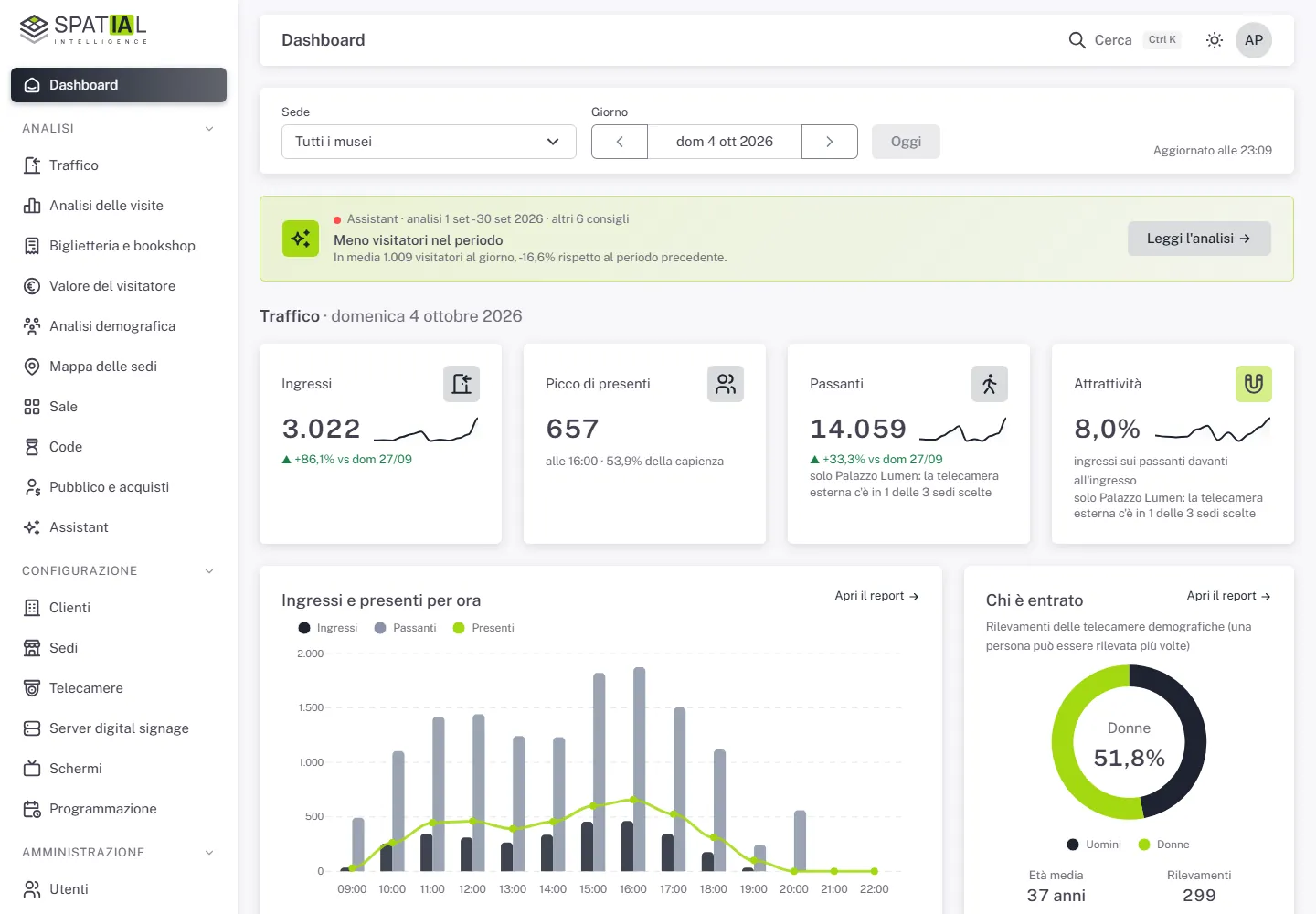
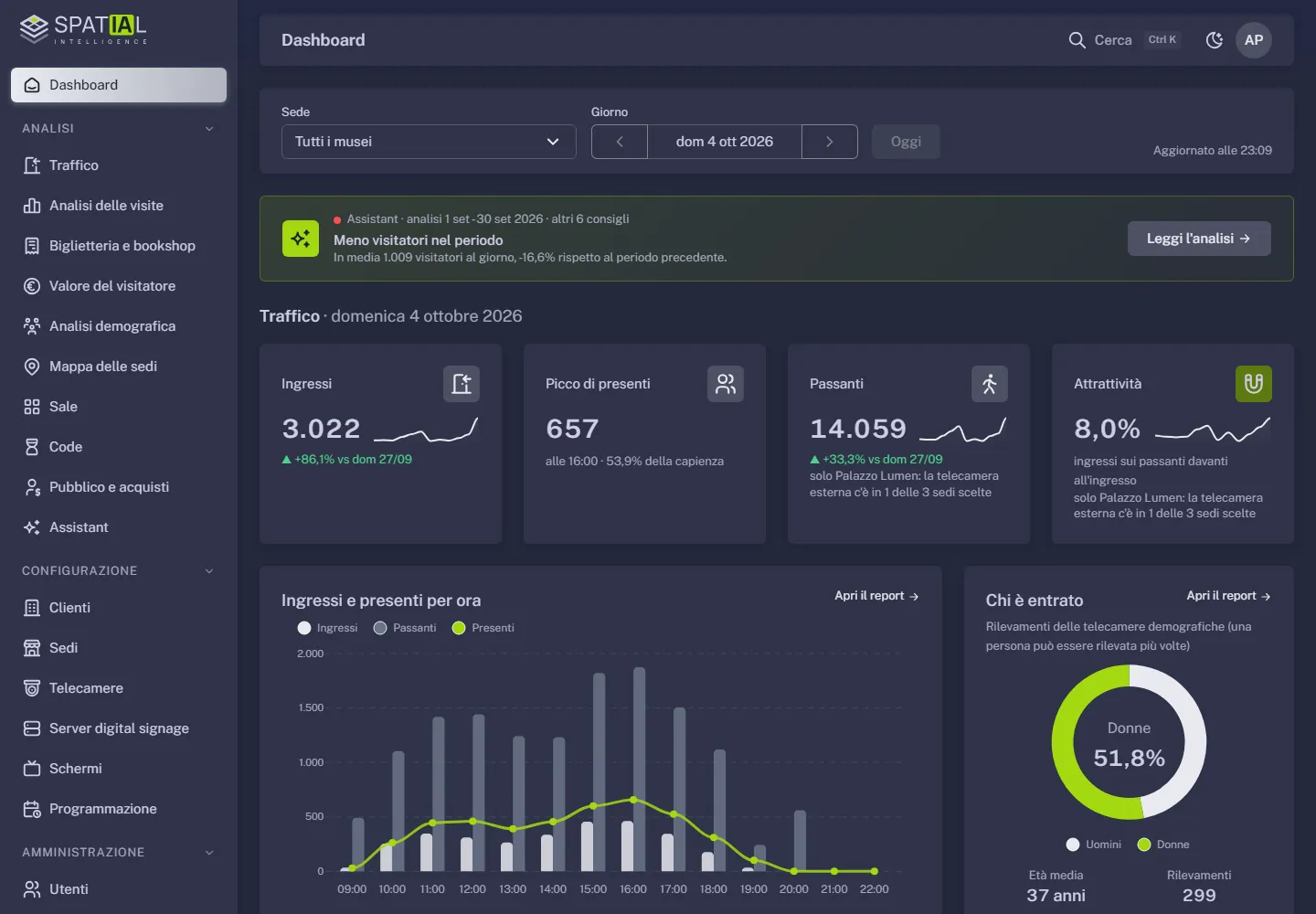
The starting point
Ticketing tells you how many came in. Not where they are, when, or which room stayed empty.
Ticket numbers tell the story at the end of the day. They do not tell you that at eleven room 2 was over capacity, that the upper-floor route empties after four, that Saturday's audience is younger. These are the facts you need to decide shifts, opening hours, exhibitions, communication and safety. SPATIAL measures them and puts them on one dashboard.
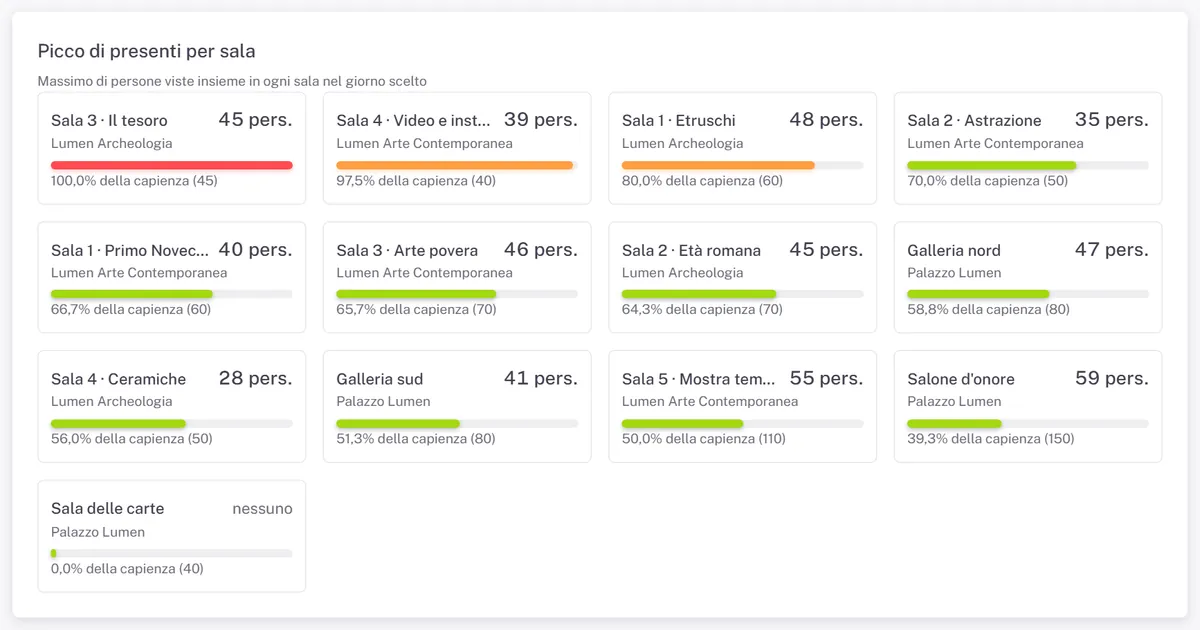
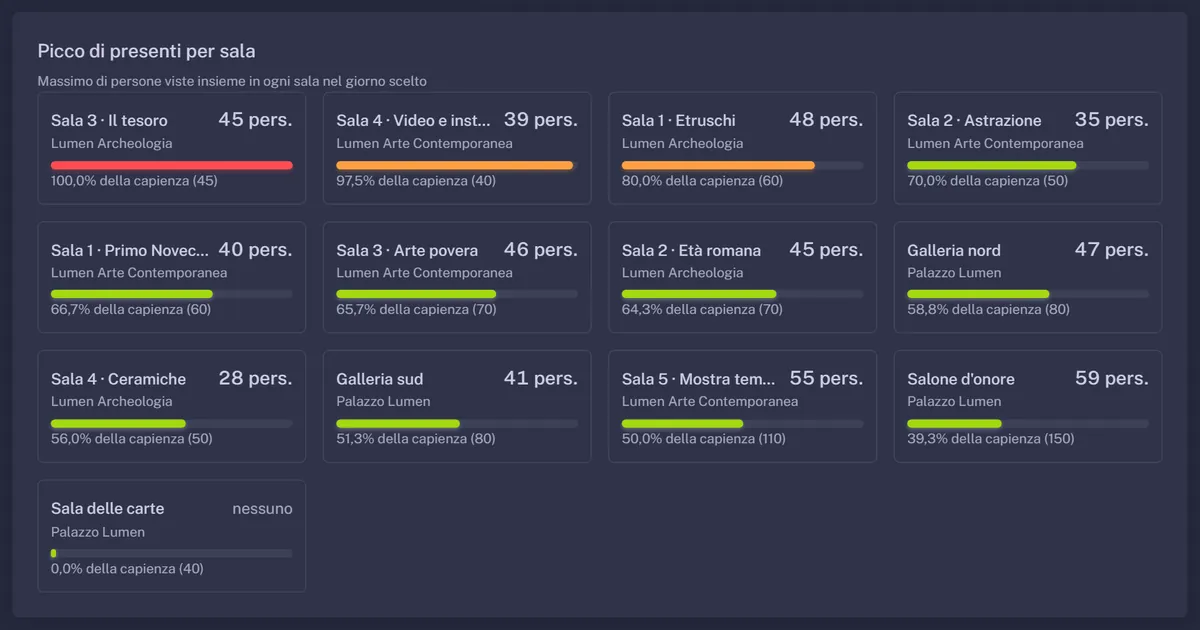
Example from demo data
What it measures in the museum
Six measures to know your audience.
Monitoring
Entries, exits and real-time occupancy, per venue and per room, with capacity and crowding threshold highlighted.
Flows
Peak hours and days, most and least visited rooms and areas, comparison over time: before and after a new display, an exhibition, a change of route.
Audience
Visitors' age groups and gender, by hour and day, always aggregated: young people, adults, seniors, peak days.
Queues
Queues at ticketing, entrances, cloakroom and facilities: when they form and how long they are.
Engagement
On-screen content that changes with the audience present: one language for young people, another for adults, at the right moment.
Statistics and reports
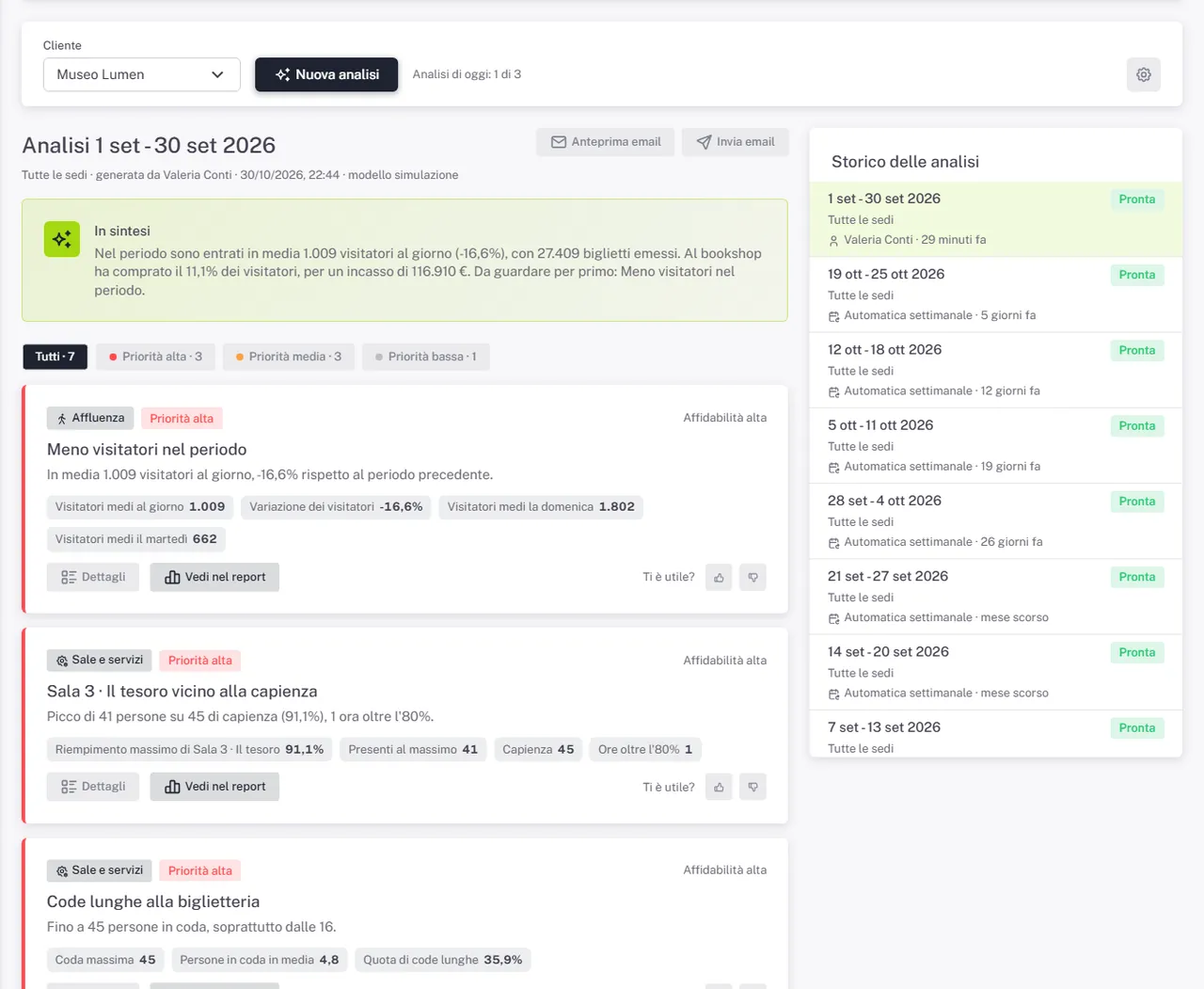
Ready-made reports for management and funding bodies, comparison with the previous year, data export, and an Assistant that sums up your week in a few sentences.
Estimated dwell time per room and reading of routes between rooms.
The platform
The language of the museum, not of the store.
Venues, rooms, visitors, ticketing and shop: SPATIAL speaks like your museum. Tickets stay out of the sales indicators; conversion is measured on the shop.
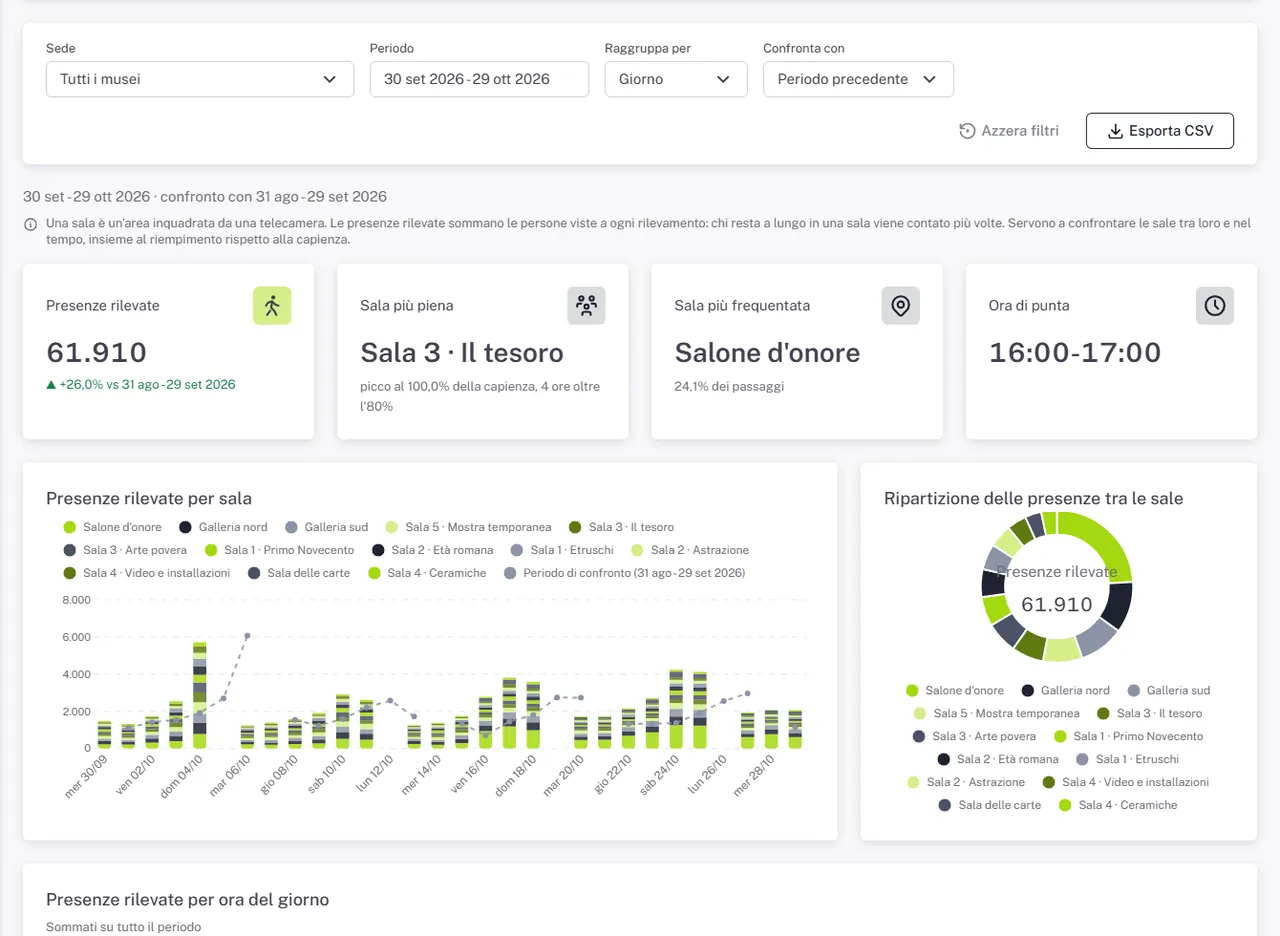
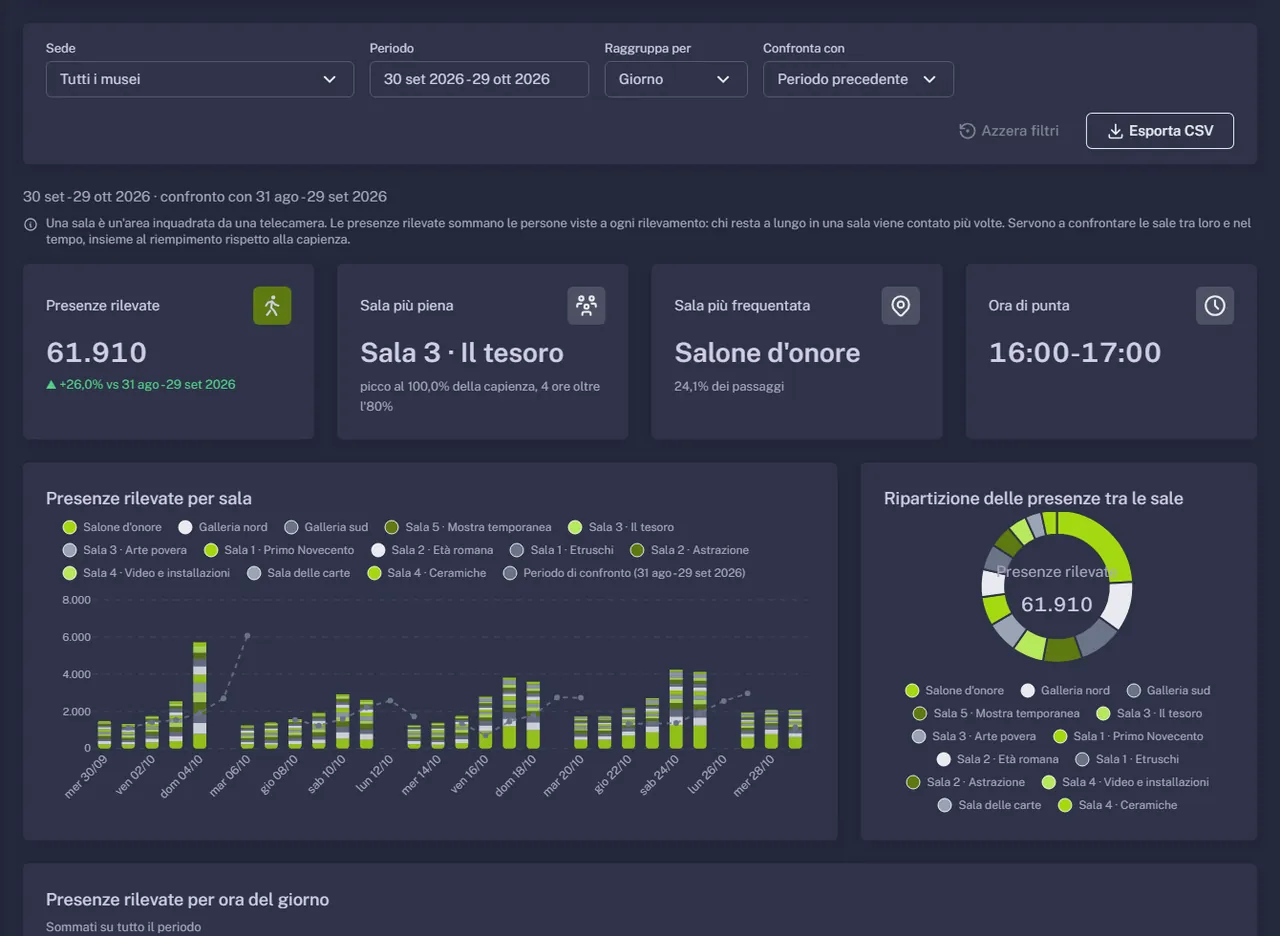
Rooms and areas. People detected in each room or area, hour by hour: which attract and which empty out.
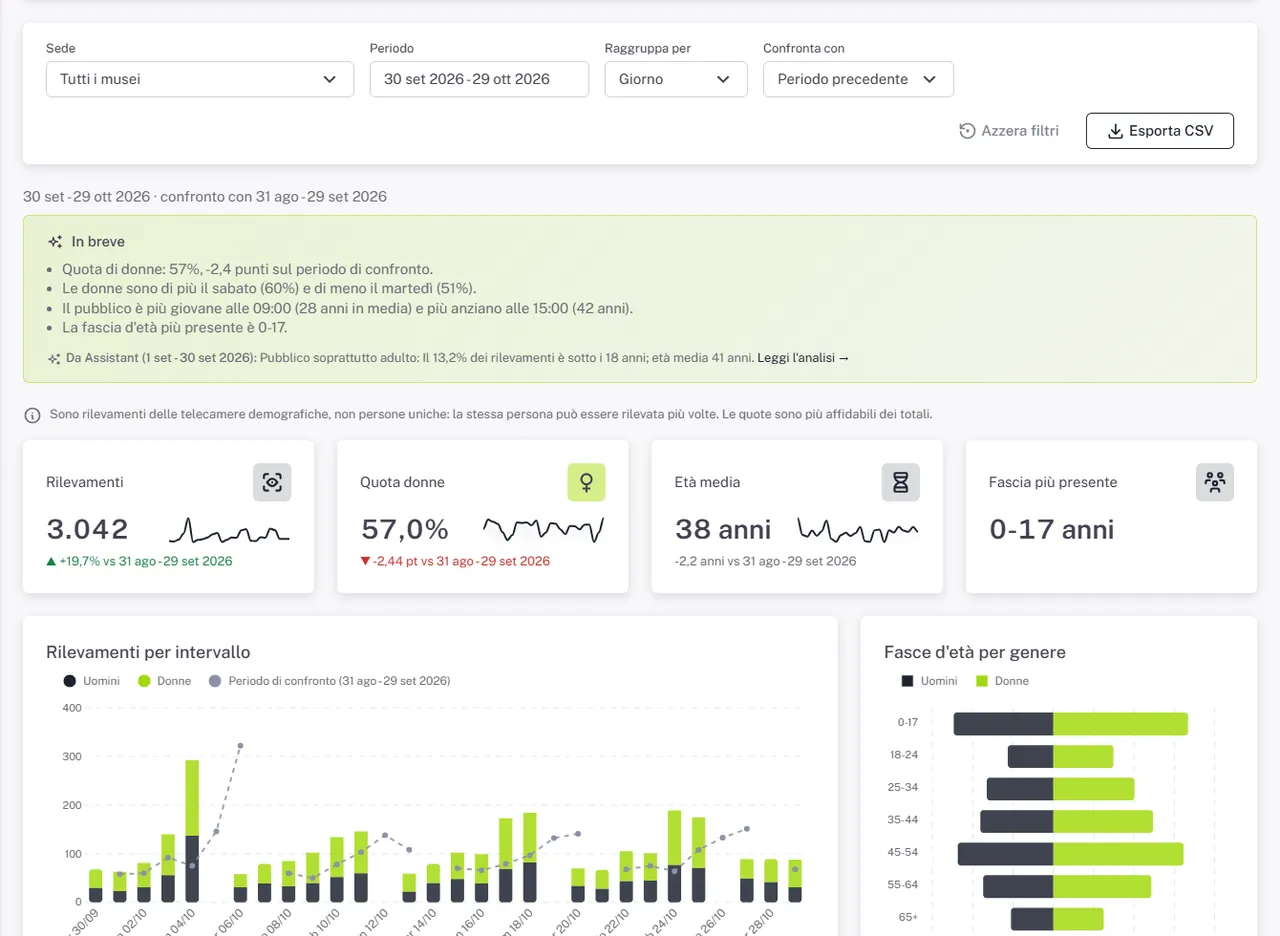
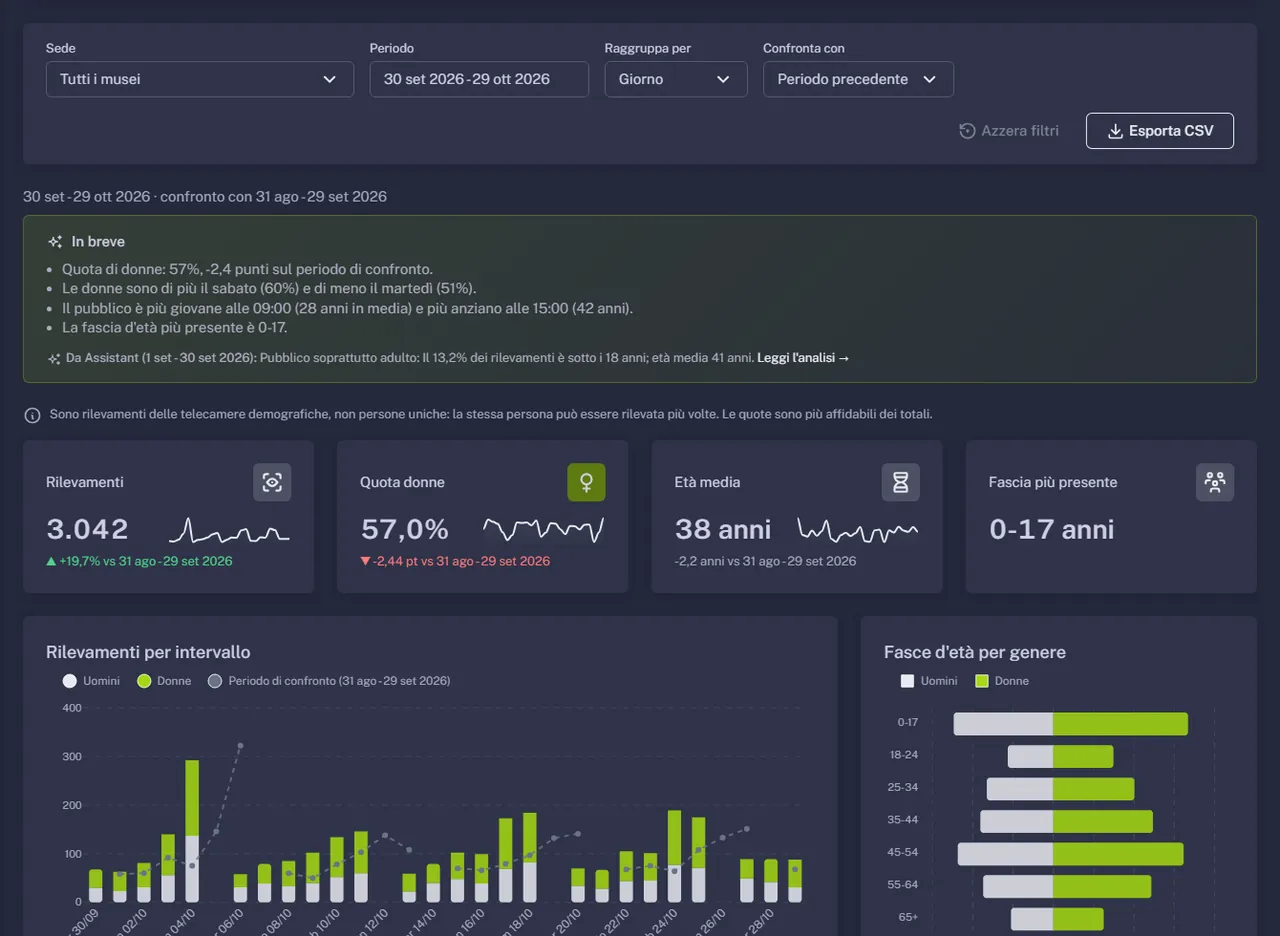
Audience. Visitors' gender and age groups by hour and weekday.
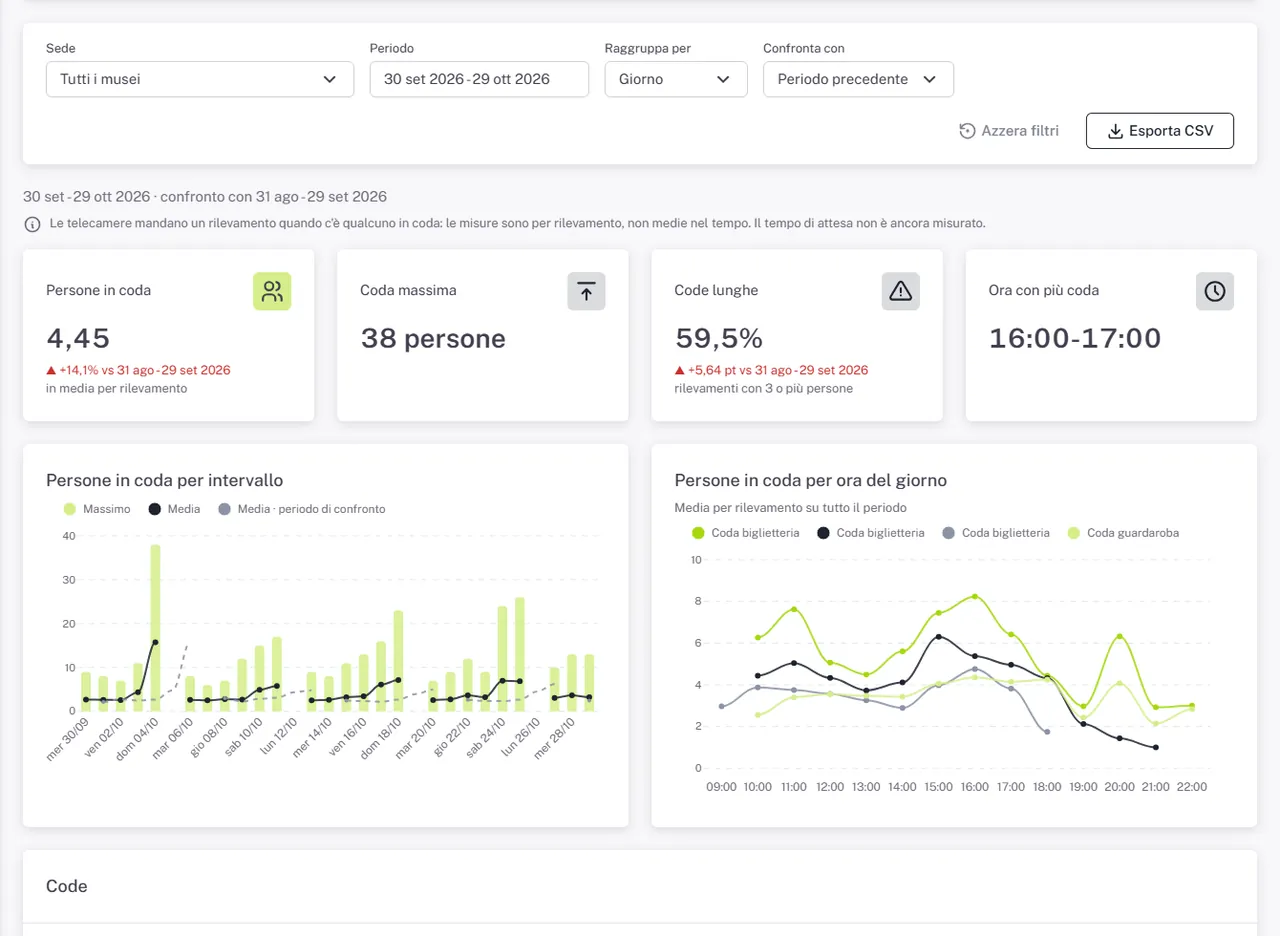
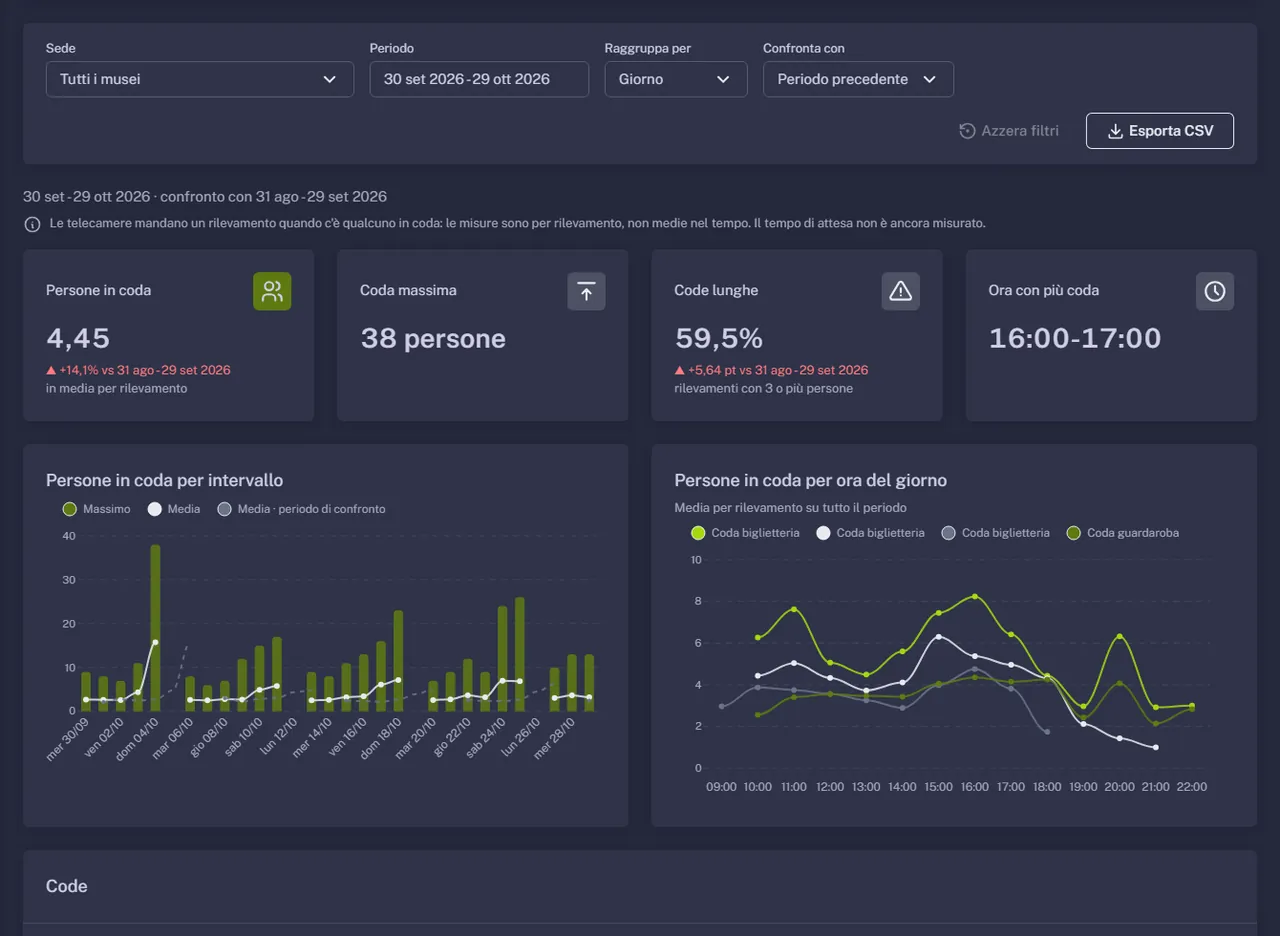
Queues. People queuing at ticketing and entrances, by hour and day.
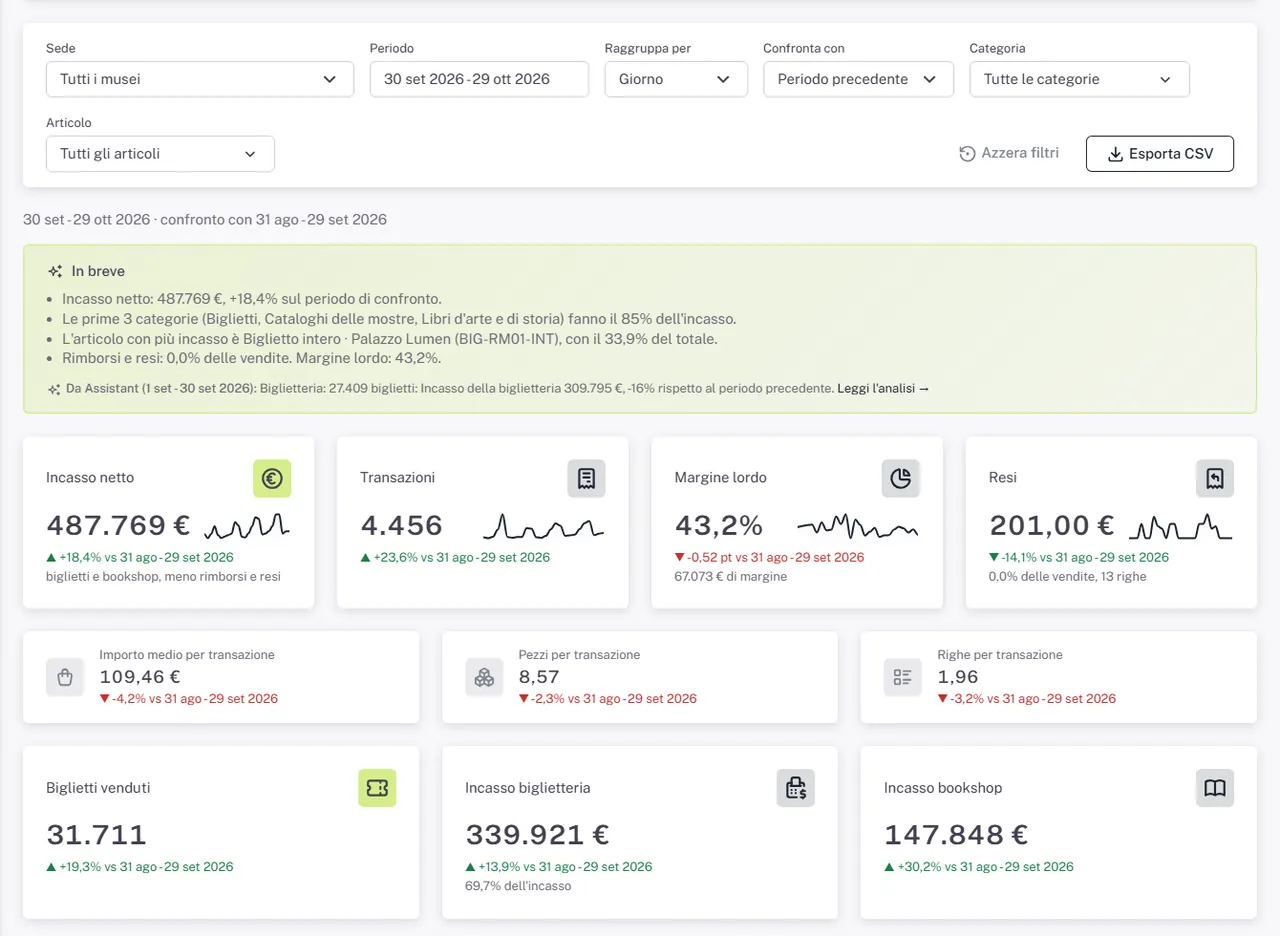
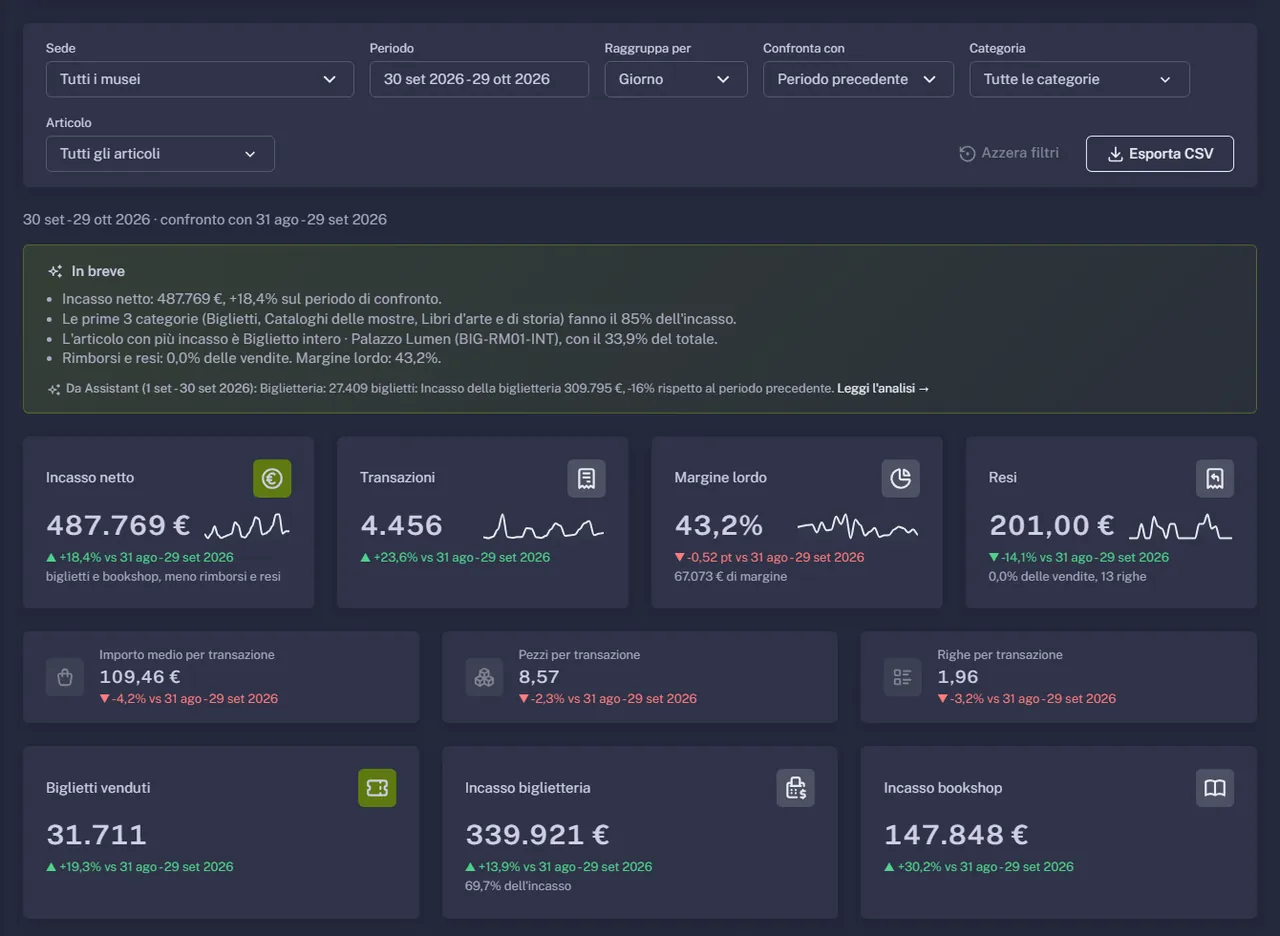
Ticketing and shop. Tickets by type next to the flows, shop sales and the conversion of visitors into buyers.
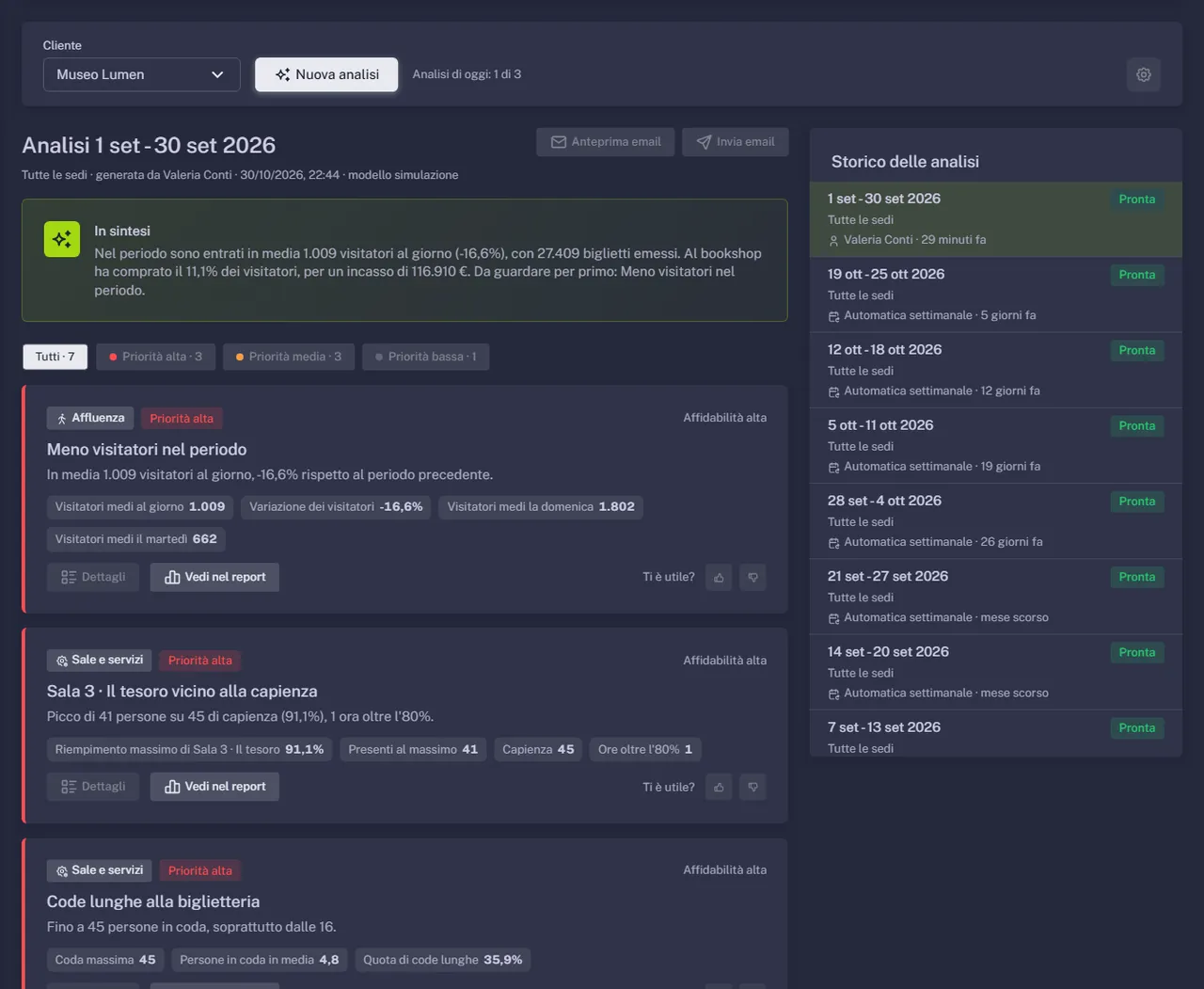
Assistant. Every week what happened in the rooms, why, and what to do: staff, opening hours, communication.
What you do with it
Decisions on hours, rooms and audience, backed by numbers.
Staff and opening hours on real flows
Shifts, evening openings and room attendants decided on measured flows.
Crowding and safety
Capacity thresholds per room always in view, even on free days and during events.
Displays and routes
The effect of a new display or a route change measured before and after.
Temporary exhibitions
How much audience an exhibition brings, who they are, when they come, what happens to the permanent collections.
Shop and communication
The audience profile to choose products, hours and messages; shop sales next to the flows.
Reporting
Verifiable numbers for funding bodies, sponsors and grants, without manual counting.
Privacy
Discreet cameras, aggregated data, no faces.
Smart cameras, installed at entrances and in key rooms, count and estimate on board. Only counts and groups reach SPATIAL, anonymous and encrypted; no video is stored and nobody is recognised. Ticketing data come from your systems. Everything runs in your infrastructure and is used from a browser.
Your data stays yours.
- Designed with young audiences in mind: no individual data, ever.
- Small cameras, installed under the same constraints as the security cameras already there.
- Ready-made texts for the privacy notice and the entrance sign.
- Access by role: management, single venue, single room.
Smart digital signage
Content that speaks to the audience present.
Museum screens can change their message depending on who is in front: the kids' route when a school class walks by, evening visits to the exhibition for adults, morning guided tours for over-65s, the shop catalogue at the exit. You prepare a schedule for each profile and SPATIAL puts it on air at the right moment.
- Themed advertising for specific targets
- Targeted slots to offer partner brands
- Coverage by gender and age always in view
- No face stored: the estimate stays on the camera
- 1
Prepare the content
Campaigns, promotions and videos are uploaded to the digital signage system as usual.
- 2
Match it to profiles
For each screen choose the programme by gender, age group and duration. Rules can be copied to other screens.
- 3
The screen adapts
The camera next to the screen estimates who is in front: SPATIAL puts the right programme on air.
- 4
Measure and improve
See who passed in front of each screen and which groups were left without dedicated content.
Today SPATIAL drives screens managed by Dahua MPS. For other digital signage systems we assess the integration with you.
2-4 December 2026 · Rome
Meet us at RO.ME Museum Exhibition.
We present SPATIAL for museums at the 9th edition of the international fair on museums and cultural venues, in the Corsie Sistine of the Santo Spirito in Sassia complex, Rome. Drop by our corner or book a meeting: we will show you the platform on a museum's sample data.
Complesso Monumentale di Santo Spirito in Sassia, Via Borgo Santo Spirito 3, Rome
Book a meeting at the fair
LMP Smart's participation in RO.ME Museum Exhibition 2026 is co-funded by the Lazio ERDF Regional Programme 2021-2027. The project
Frequently asked questions
The questions we hear most often.
Can I use the cameras I already have?
If they are Dahua WizMind cameras with on-board analytics, often yes. Otherwise a few cameras at key points are enough: entrances, ticketing, main rooms. We assess it with you and your installer.
What about a listed historic building?
The cameras are small and are installed under the same constraints as the security cameras already there. Assessments with heritage authorities remain with the museum and the installer.
Does it connect to ticketing?
Yes: ticket and attendance data come from your system through a periodic export and sit next to the flows, hour by hour. Shop sales are kept separate from tickets.
One museum or a museum network?
Both: each venue has its own data, the network's management sees the comparison and the map.
What about visitors' privacy, including minors?
No face is stored and nobody is recognised: only counts and aggregated groups. We provide the texts for the notice and the entrance sign.
Contact
Want to understand your audience, room by room?
A demo with a museum's sample data, then a pilot in your rooms.
What happens next
- 1We reply within one working day.
- 2We set up a thirty-minute online demo.
- 3We assess spaces, cameras and goals together.
Prefer email?info@spatial-intelligence.it
LMP Smart S.r.l., Via Vincenzo Troya 24, 00135 Rome, Italy